
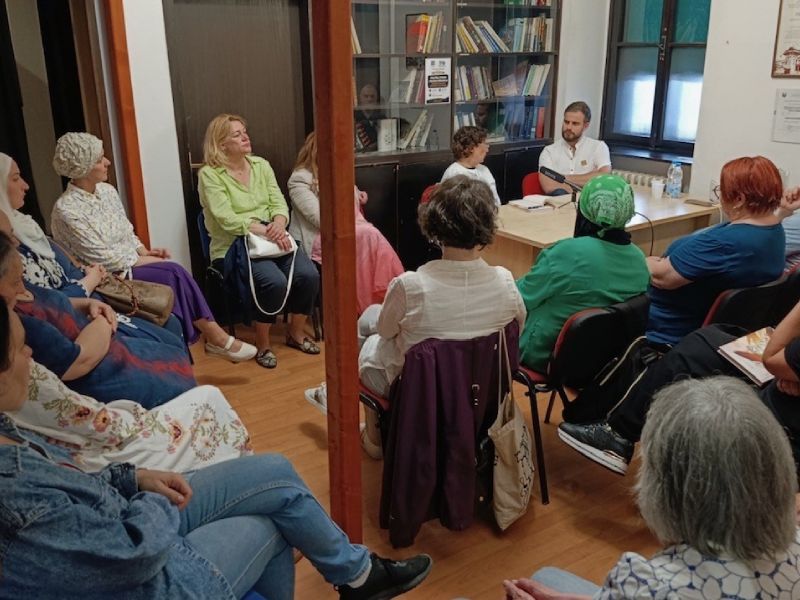
On June 15, 2026, TPO Foundation and IMIC Zajedno organized a roundtable titled “Politics of Fear and the Culture of the Enemy: The Return of Fascist Imagination in the 21st Century.” The guest speaker was Prof. Dr. Aida Hozić from the University of Florida, and the event was moderated by Nikola Vučić.
Prof. Dr. Aida Hozić, Professor of International Relations at the University of Florida in the United States, analyzed contemporary forms of political populism, the erosion of liberal institutions, and the growing global politics of fear, exclusion, and the production of enemies. Professor Hozić paid particular attention to the contradictions of contemporary liberal democracies, emphasizing that policies of representation and inclusion often do not lead to real change in the structural position of marginalized groups. She highlighted the position of women and minorities, noting that their visibility in political spaces may be increasing, while the material, economic, and institutional conditions of their participation often remain unchanged.
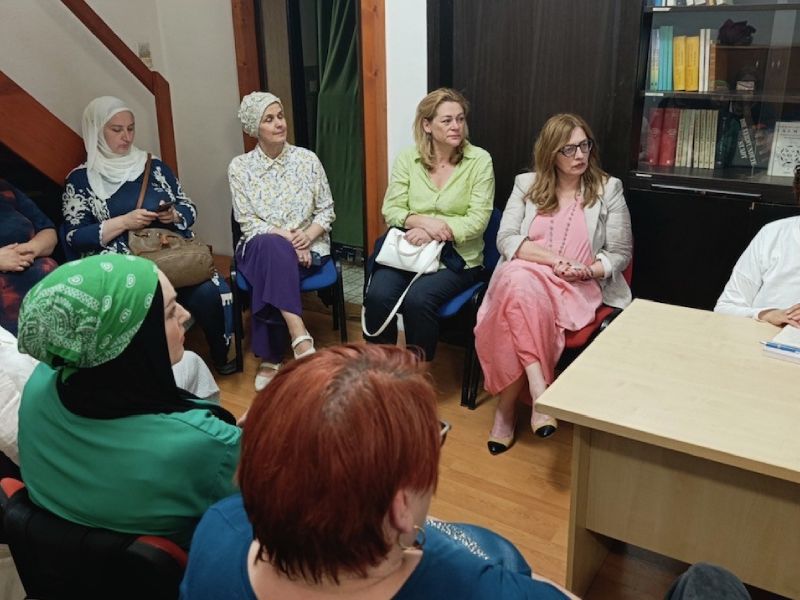
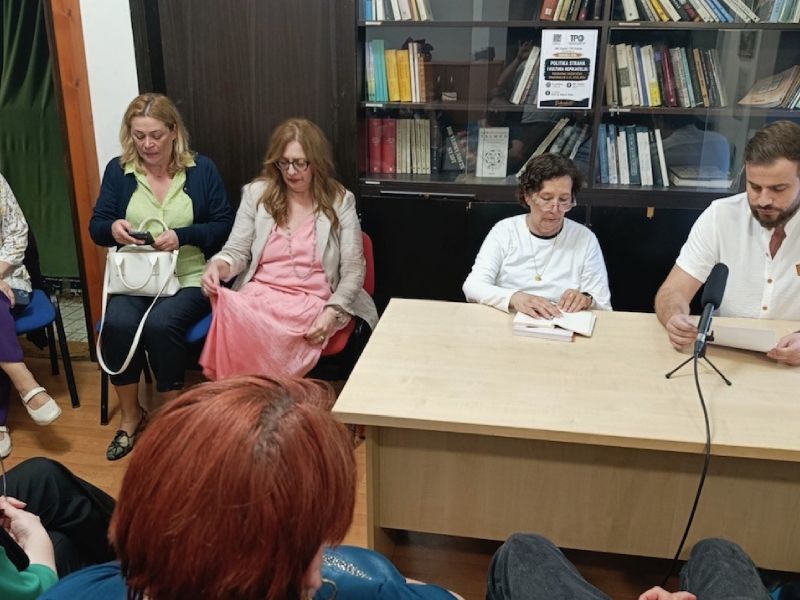
During the lecture, she also discussed political processes in the United States, with special reference to rising political tensions, the strengthening of the right, and declining trust in democratic institutions. In this context, she emphasized the importance of local political movements as potential spaces for democratic renewal, as well as the role of new generations of political activists, digital campaigns, and social media in contemporary political engagement.
Special attention was devoted to the global consequences of the rise of right-wing politics, including their reflections in Europe and the Balkans. As emphasized during the lecture, contemporary political patterns are increasingly manifested through the rise of nationalism, the normalization of exclusionary narratives, and the weakening of institutions that should protect human and minority rights. The lecture also stressed the importance of understanding economic inequalities, particularly after the 2008 financial crisis and the COVID-19 pandemic, as factors that contribute to political radicalization and social polarization.
In the discussion with the audience, participants addressed the role of the academic community, the media, and universities in contemporary political processes. Particular concern was expressed about growing pressures on academic institutions, the rise of self-censorship, and increasing polarization in the public sphere.
The participants agreed that contemporary political trends require a deeper understanding of the links between economic crises, social inequalities, and ideological shifts. They also emphasized the need to rethink new forms of democratic action at the local, regional, and global levels.