



















Supporting human rights does not have to mean the “secularization” of believers, but rather the political translation of diverse moral traditions into a shared constitutional and legal language—this was one of the key messages of a lecture on the relationship between liberal policies and religious contexts.
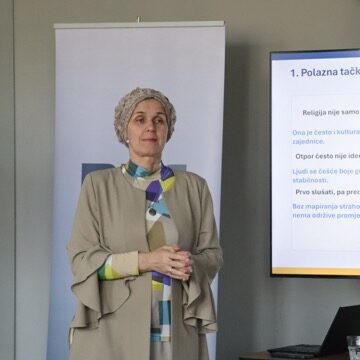
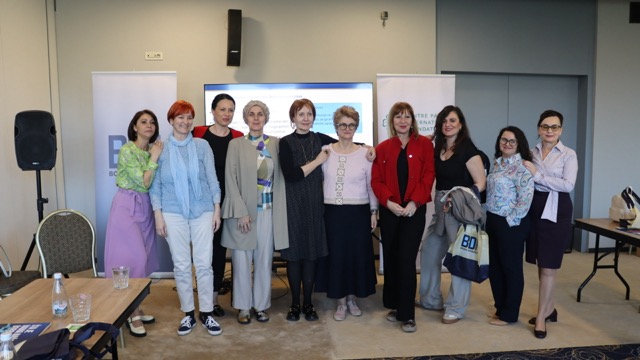
The lecture was delivered on April 18, 2026, as part of the Regional Academy for Women organized by the Boris Divković Foundation in Sarajevo, by Prof. Dr. Zilka Spahić Šiljak.
During the lecture, attended by women politicians from Bosnia and Herzegovina and the region, Prof. Spahić Šiljak discussed the perception of conflict between the secular and the religious. She emphasized, among other things, that political rhetoric and media narratives often amplify the impression of a deep value divide.
In practice, however, the differences are often interpretative—disputes are typically about the boundaries of state neutrality, rather than about rights and freedoms themselves.
As an illustration, she pointed to different models of state–religion relations: the French model of laïcité represents a stricter form of state neutrality, while Canadian and British approaches are more flexible and open to the public presence of religious actors.
In the discussion that followed, participants emphasized the importance of openly addressing these topics, noting that everyone carries certain biases that need to be examined. It was also highlighted that formally embracing liberal values does not necessarily mean a genuine acceptance of social pluralism.
