



















The way we remember determines whom we see, whom we trust, whom we recognize as subjects of history, and whom we leave at the margins.
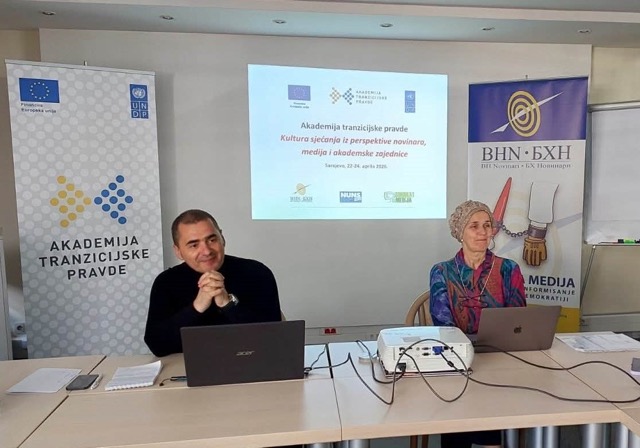
On April 23, 2026, Prof. Dr. Zilka Spahić Šiljak delivered a lecture at a seminar on transitional justice, organized by BH Journalists, which brought together journalists from across the Balkan region.
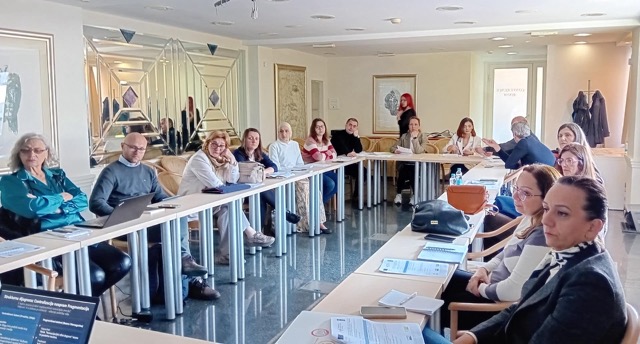
In her presentation, Prof. Spahić Šiljak addressed the gender perspective of transitional justice, emphasizing that it is essential because dominant cultures of remembrance in our region remain largely “male-coded.” This means that public narratives are most often shaped around the military, the front lines, command structures, battles, territory, political leadership, and national suffering, while women’s experiences are often reduced to footnotes or symbolic decoration.
She also highlighted differences in how men and women articulate wartime experiences. Men’s memories are more often expressed through daily political discourse and from a war-related, partly military perspective, while women’s experiences are more frequently framed through the lens of civilian wartime life and displacement. This insight demonstrates that a gender perspective is not external to the culture of remembrance—it is already part of it, but not equally recognized.
In conclusion, Prof. Spahić Šiljak stated:
“If we want a more just society, we also need a more just way of remembering. And there can be no just remembrance without a gender perspective. That is why the role of the academic community is so important—to help society see what has long remained invisible, to hear what has long gone unheard, and to name what has long remained unnamed.”
