
Do gender stereotypes change throughout history, or is it merely the ways in which they are legitimised that change? How have biology, philosophy and religion shaped our understanding of femininity and masculinity, and how do contemporary technologies adopt and reproduce centuries-old patterns of gender inequality?
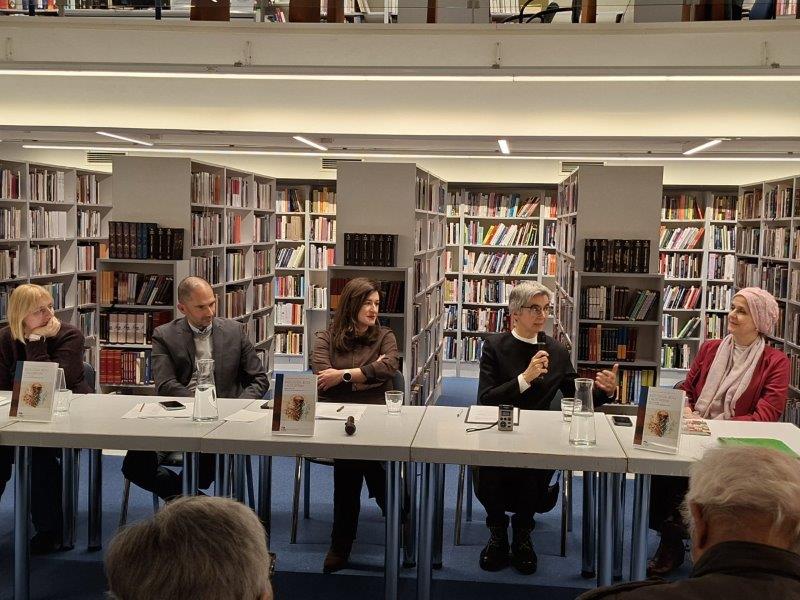
These and other questions were discussed on 24 November 2026 at the Bogdan Ogrizović Library in Zagreb, where the book Biology, God and the Algorithm: Gender Stereotypes from the Stone Age to the Digital Age, authored by Dr Jadranka Rebeka Anić, retired senior research fellow, and Professor Dr Zilka Spahić Šiljak, was presented.
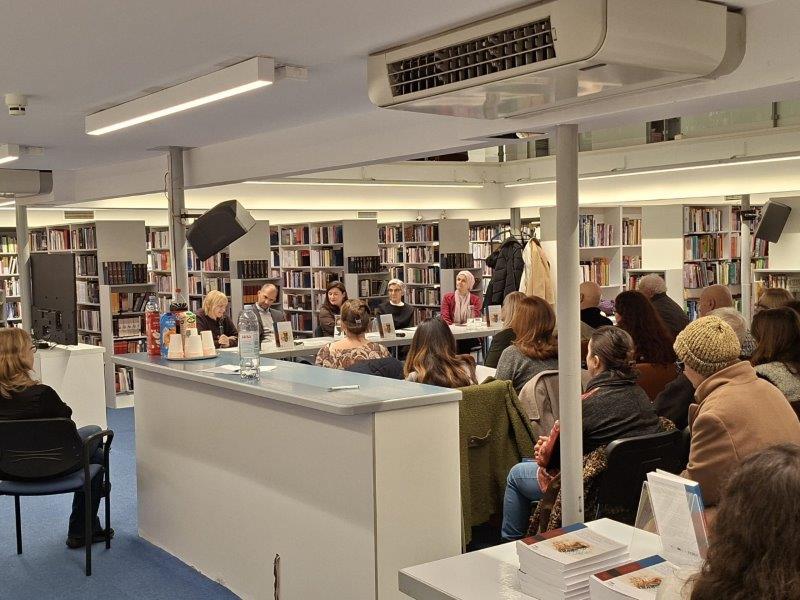
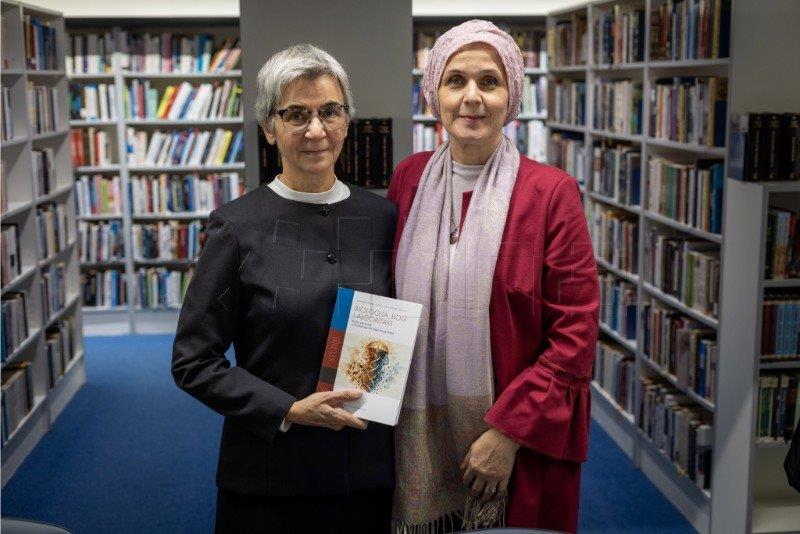
The book is the result of research conducted within the framework of the NextGenderHR project of the Ivo Pilar Institute of Social Sciences, funded by the European Union, in which both authors participate as external collaborators. The book was published by the Ivo Pilar Institute of Social Sciences and co-published by the ZATO Foundation from Zagreb and the TPO Foundation from Sarajevo, which also funded its publication.
The book was presented from different disciplinary perspectives by Associate Professor Dr Anita Dremel from the Faculty of Humanities and Social Sciences, Josip Juraj Strossmayer University of Osijek, who offered a sociological perspective; Professor Dr Anita Lauri Korajlija from the Faculty of Humanities and Social Sciences, University of Zagreb, who provided a psychological perspective; and Professor Dr Marko Medved from the Faculty of Medicine, University of Rijeka, who addressed the book from a theological perspective.
The particular significance of the book lies in its interdisciplinary and interreligious approach to exploring the emergence, legitimisation and perpetuation of gender stereotypes from prehistoric times to the contemporary digital age. The authors critically examine the mechanisms through which socially and culturally constructed perceptions of women and men have been presented as biological facts, divine decrees and, more recently, as the outcomes of supposedly neutral technological processes.
By analysing the interplay between scientific and religious interpretations of femininity and masculinity, the authors highlight the need to move beyond the secular–religious dichotomy in understanding and addressing gender inequality. Gender stereotypes are not exclusively a product of religious traditions, nor do they automatically disappear when such traditions are abandoned. They are also reproduced in secular societies, scientific theories, political discourses and contemporary technologies.
The book is particularly relevant at a time of growing anti-gender movements, the retraditionalisation of societies and the increasing presence of artificial intelligence in everyday life. Technological progress alone does not guarantee social progress, as algorithms can absorb, reproduce and further reinforce existing gender biases.
The book is therefore not merely a historical overview of gender stereotypes but also an invitation to critically reconsider the forms of knowledge, authority and social norms that restrict human potential and limit opportunities for achieving gender equality.
Following the Zagreb book launch, the book will be presented at the Faculty of Humanities and Social Sciences of the University of Rijeka and the Faculty of Humanities and Social Sciences of Josip Juraj Strossmayer University of Osijek, followed by presentations in Bihać, Banja Luka, Travnik, Mostar, Sarajevo, Tuzla, Zenica and Novi Sad.
Media coverage:
HINA – Croatian News Agency: https://www.hina.hr/vijest/12592052