



















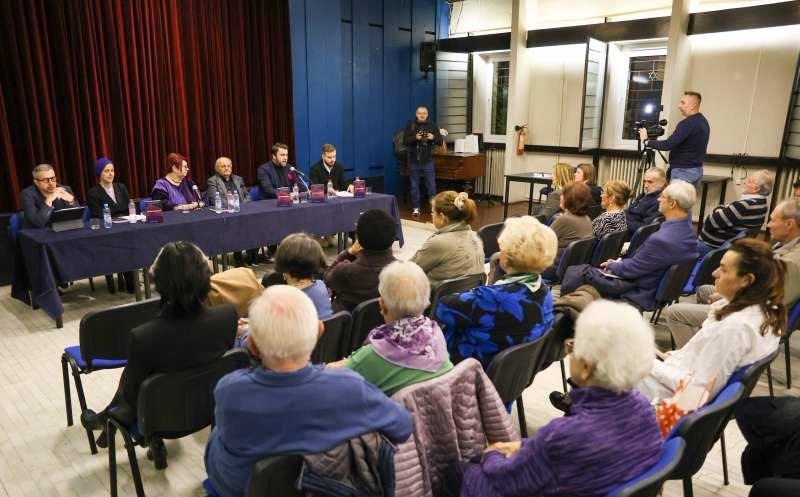
Humanity is not only about providing assistance to those in need, but also about preserving a space where people can remain human despite war, fear, and destruction. The book La Benevolencija – A Place of Encounter: Humanity and Dialogue 1992–1995, written by Elma Softić-Kaunitz, was presented at the Jewish Community Center in Sarajevo. The publication offers a valuable testimony to the work of the Jewish Cultural, Educational, and Humanitarian Society La Benevolencija during the siege of Sarajevo.
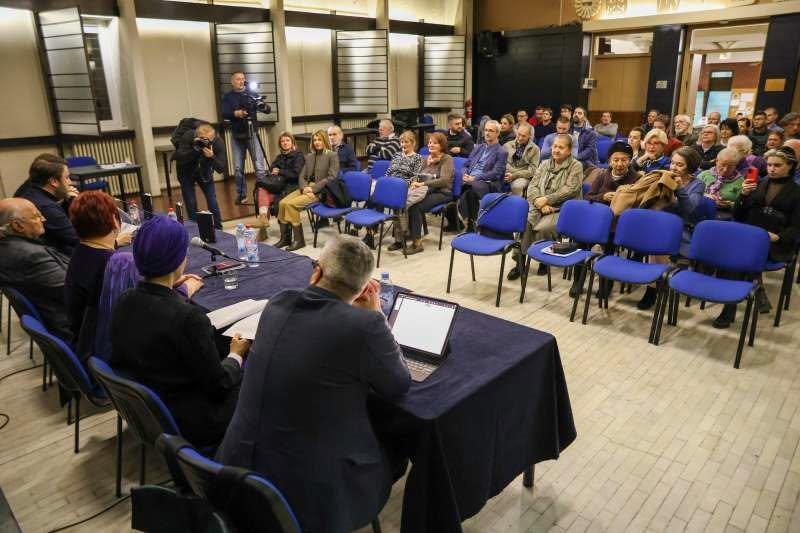
The author, Elma Softić-Kaunitz, emphasized that the book is not only about the humanitarian assistance La Benevolencija provided to the citizens of Sarajevo, but also about the creation of a space for encounters, conversations, and mutual support. At a time when war and violence were destroying social bonds, La Benevolencija became a place where people from different national, religious, and social backgrounds could meet, reconnect with friends, exchange ideas, and preserve a sense of community.
Speaking about the book, Prof. Dr. Zilka Spahić Šiljak particularly emphasized the importance of understanding humanity as an ethical responsibility toward others, one that transcends ethnic and religious boundaries. The work of La Benevolencija during the siege of Sarajevo demonstrates that solidarity is not merely an abstract moral value but a concrete practice expressed through care, the sharing of resources, mutual trust, and the willingness to help others regardless of their identity.
From the perspective of the ethics of care and peacebuilding, the experience of La Benevolencija is particularly important because it demonstrates that peace is not built only after a war has ended. Peace is also built in the midst of violence, when people refuse to accept the logic of hostility and division. In a society where identity was often used as a justification for exclusion, La Benevolencija demonstrated that identity can also become a source of responsibility, openness, and solidarity.
Prof. Spahić Šiljak also highlighted the importance of preserving such testimonies within the culture of remembrance. The history of war should not be told solely through narratives of violence, destruction, and suffering, but also through the stories of individuals and organizations that defended human dignity, resisted dehumanization, and created spaces of trust. Such stories do not diminish the gravity of war crimes and suffering. Rather, they enrich our understanding of the past by demonstrating that even under the most difficult circumstances, people had moral choices and opportunities to act differently.
The particular value of the book lies in its portrayal of La Benevolencija not only as a humanitarian organization but also as a space of civic solidarity and interreligious dialogue, where belonging to a community meant assuming responsibility for the well-being of all people.
The book presentation also provided an opportunity to reflect on the relevance of such examples for contemporary Bosnian and Herzegovinian society. At a time of renewed polarization, mistrust, and attempts to deepen social divisions, the experience of La Benevolencija reminds us that living together cannot be taken for granted. It must be cultivated every day through encounters, dialogue, and concrete acts of solidarity.
During the siege of Sarajevo, La Benevolencija was much more than a place where people received assistance. It was a place where humanity was preserved. This is one of the most important messages of the book for present and future generations.
